

AI in Healthcare: 5 Applications Transforming Health Monitoring in 2026 | Safe and Sound
The development of AI in healthcare is gradually changing that. Instead of just recording data, modern AI healthcare systems can analyze millions of health data points, detect abnormalities, and help users proactively monitor their physical condition.
From hospitals and clinics to smart wearable devices, AI applications in healthcare are opening up a new approach: healthcare based on continuous data rather than sporadic check-ups.
What is AI in healthcare?
Artificial intelligence in healthcare is the application of artificial intelligence to collect, process, and analyze medical data to support doctors, patients, and healthcare systems in making more effective decisions.
Unlike traditional software that only stores information, AI has the ability to learn from data, recognize patterns, and make predictions based on previously observed trends.
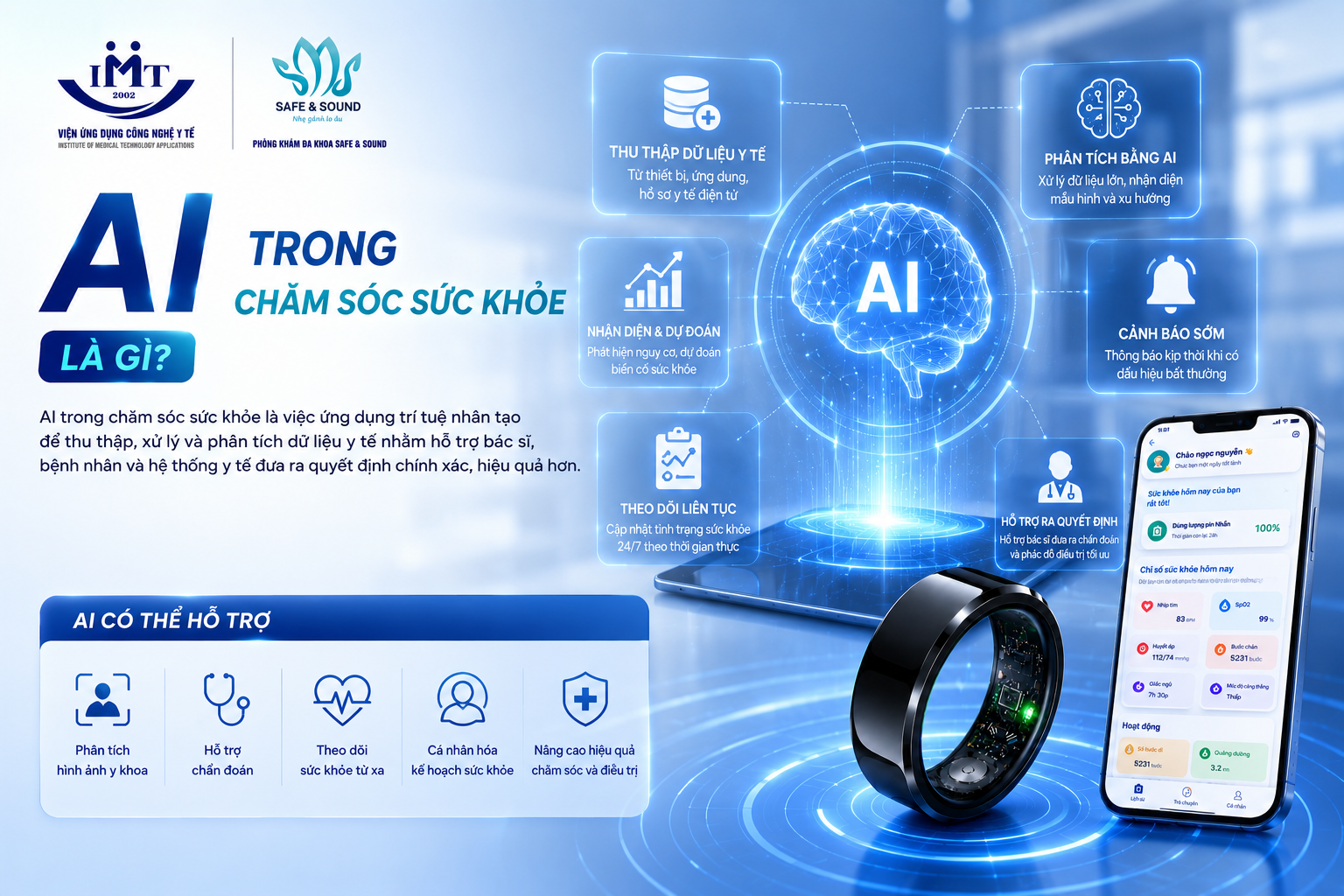 In the field of modern medical technology, AI can:
- Medical image analysis.
- Assists in diagnosing diseases.
- Remote health monitoring.
- Anomalous risk has been detected.
- Personalize your healthcare plan.
Thanks to its ability to process massive amounts of data that humans would find difficult to track manually, AI is becoming one of the most heavily invested technologies in the global healthcare industry.
>> See also: Smart Ring, App or Smartwatch: Which is the Leading Technology-Based Healthcare Solution in 2026?
Why is AI healthcare gaining increasing attention?
Every day, our bodies generate thousands of health-related data points such as heart rate, blood pressure, activity level, sleep quality, and blood oxygen levels.
The problem is that much of this data is often overlooked or not fully analyzed. This is where AI healthcare can fill the gap. Instead of just displaying individual numbers, AI helps to
- Connecting health data into a holistic picture.
- Identifying trends that change over time.
- Identify abnormal signs earlier.
- It helps users better understand their body's condition.
This is especially important in the context of more and more people choosing proactive healthcare rather than only seeking treatment after illness has already occurred.
5 AI applications in healthcare that are changing the way we monitor health.
Artificial intelligence is no longer a technology confined to research labs or large hospitals. Today, AI is being widely applied in many healthcare activities, from assisting in disease diagnosis to monitoring daily health metrics on personal devices.
Thanks to its ability to analyze data quickly and continuously, AI healthcare is making health management more proactive, accurate, and personalized. Below are five AI applications in healthcare that are gradually changing how people monitor and care for their health every day.
Supporting early detection of health risks.
One of the most promising applications of AI in healthcare today is its ability to detect health risks early from seemingly small amounts of data. Previously, most of us only paid attention to our health when our bodies showed obvious symptoms such as headaches, persistent fatigue, shortness of breath, or insomnia. However, many diseases develop silently over months, even years, before any easily recognizable signs appear.
AI has the ability to analyze massive amounts of health data collected over time, including heart rate, blood pressure, sleep quality, activity levels, and many other biological indicators. When it detects an unusual trend compared to the user's normal state, the system can provide early warnings so that the user can proactively monitor their condition or seek medical advice.
The unique aspect of AI lies not in its ability to evaluate a single metric, but in its capacity to see the connections between various data points. For example, simultaneous changes in resting heart rate, sleep quality, and activity levels can reflect health fluctuations that humans would find difficult to recognize if they only observed each metric individually.
It is this ability to identify trends that is helping AI become a crucial tool in proactive healthcare, rather than simply reacting after a disease has already appeared.
Continuously monitor your health using smart wearable devices.
The development of wearable devices is revolutionizing the field of AI health monitoring. While health checks used to take place at hospitals or clinics at specific times, today health data can be recorded continuously 24 hours a day.
Devices such as smartwatches, smart bracelets, or smart rings are capable of collecting many important metrics such as heart rate, SpO2, physical activity levels, calorie expenditure, and sleep quality. This data is then synchronized with an AI platform for real-time analysis.
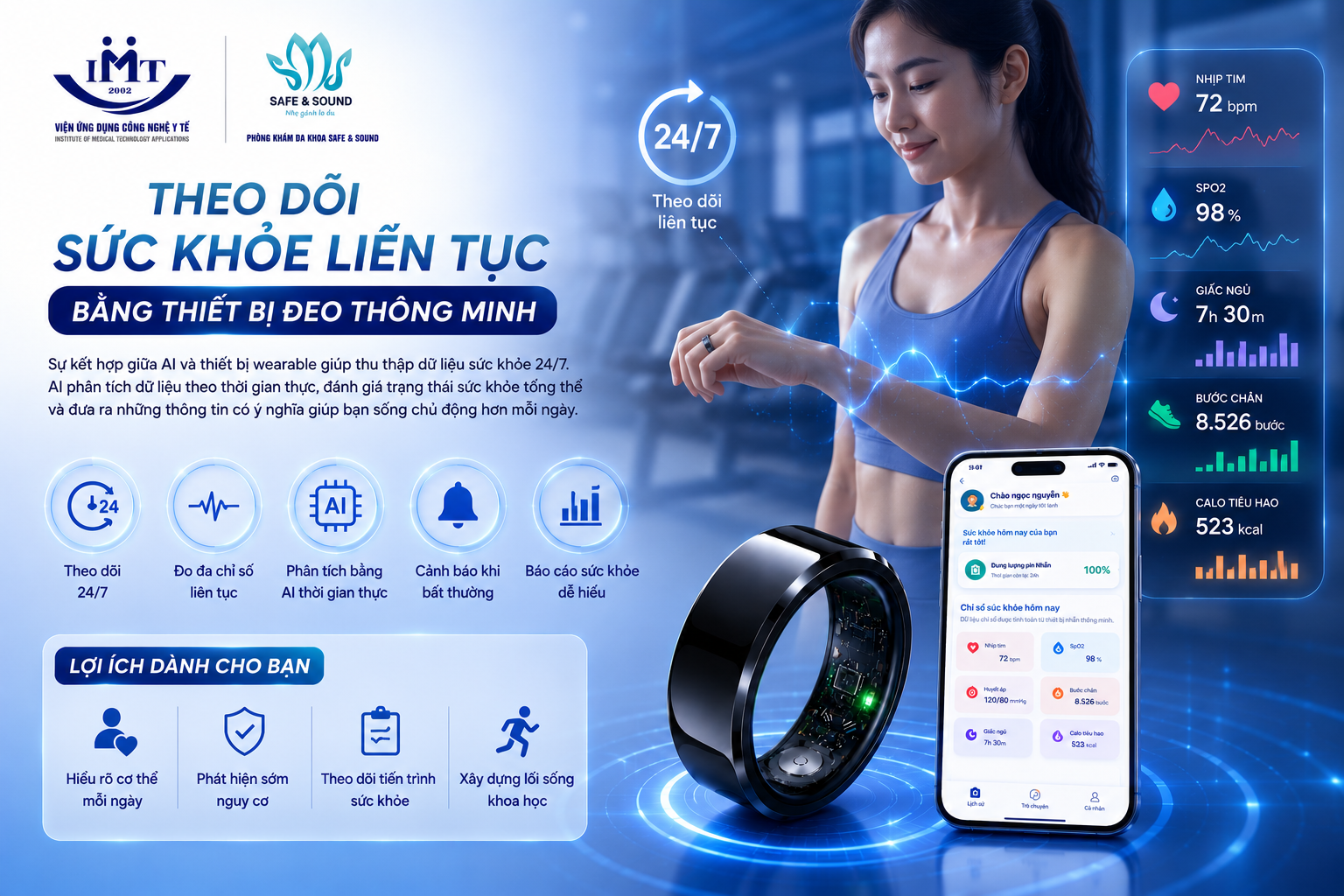
The real value doesn't lie in users knowing their current heart rate or how many steps they've taken that day. More importantly, AI can synthesize all the data into a comprehensive health picture. Through this, users can better understand their physical condition, recovery ability after exercise, stress levels, or any unusual changes occurring.
Thanks to its continuous monitoring capabilities, AI helps transform dry numbers into meaningful information, thereby supporting users in building a healthier and more proactive lifestyle to protect their health.
Assisting doctors in the diagnostic process.
When it comes to AI healthcare, many people often ask whether AI can replace doctors in the future. In reality, the most important role of AI today is to assist healthcare professionals in the diagnosis and treatment of diseases.
Every day, hospitals and medical facilities process a massive amount of data in the form of patient records, test results, and medical images. Analyzing all this data requires significant time and resources. This is where AI can truly excel.
Modern AI systems are capable of reviewing thousands of X-ray, CT, or MRI images in a short time to aid in the detection of abnormalities. Simultaneously, AI can analyze medical history, comparing it with previously recorded medical data to provide helpful suggestions to doctors.
This doesn't mean AI makes the final conclusions on its own. Instead, the AI doctor acts as a technological assistant, easing the workload of data analysis and helping healthcare professionals make decisions more quickly.
The combination of doctors' clinical experience and AI's data processing capabilities is seen as an effective healthcare model for the future.
Personalize your healthcare plan.
Everyone has different physical conditions, lifestyles, and health risks. Therefore, a healthcare plan that works for one person may not be effective for another.
 This is why personalization is becoming a key trend in modern healthcare technology. Instead of applying generic recommendations to everyone, AI can analyze individual data to build suggestions tailored to each user.
For example, if the system detects that a user frequently stays up late and has poor sleep quality, the AI can offer recommendations related to rest time or lifestyle habits. If it detects elevated stress levels over several consecutive days, the system can suggest relaxation activities or adjustments to the work schedule.
Additionally, AI can help track the effectiveness of lifestyle changes. When users start exercising or adjusting their diet, the system will record changes in health indicators to assess the level of improvement over time.
As a result, healthcare is no longer mass-produced but becomes more tailored to the needs and characteristics of each individual.
Connecting the smart healthcare ecosystem
One of the biggest limitations of traditional health tracking is that data is often scattered across multiple platforms. Information from smart wearables, health apps, medical records, and test results typically exists independently, making it difficult for users to get a comprehensive view of their health status.
AI is contributing to solving this problem by building smart healthcare ecosystems. In this model, data from various sources is centralized and synchronized on a single platform.
When all the data is connected, AI can analyze and create a holistic health picture instead of just evaluating individual metrics. Users will not only know their heart rate or how many hours they've slept but also understand what that data reflects about their bodies.
This is also the direction of many next-generation healthcare solutions, where AI plays a central role in connecting data, supporting healthcare professionals, and helping users proactively monitor their health every day.
In the future, as personal health monitoring devices, electronic medical records, and online consultation platforms become more closely integrated, AI will continue to be a crucial bridge, making healthcare smarter, more convenient, and more efficient.
Could AI replace doctors in the future?
This is a question many people are interested in when it comes to AI doctors. The short answer is no.
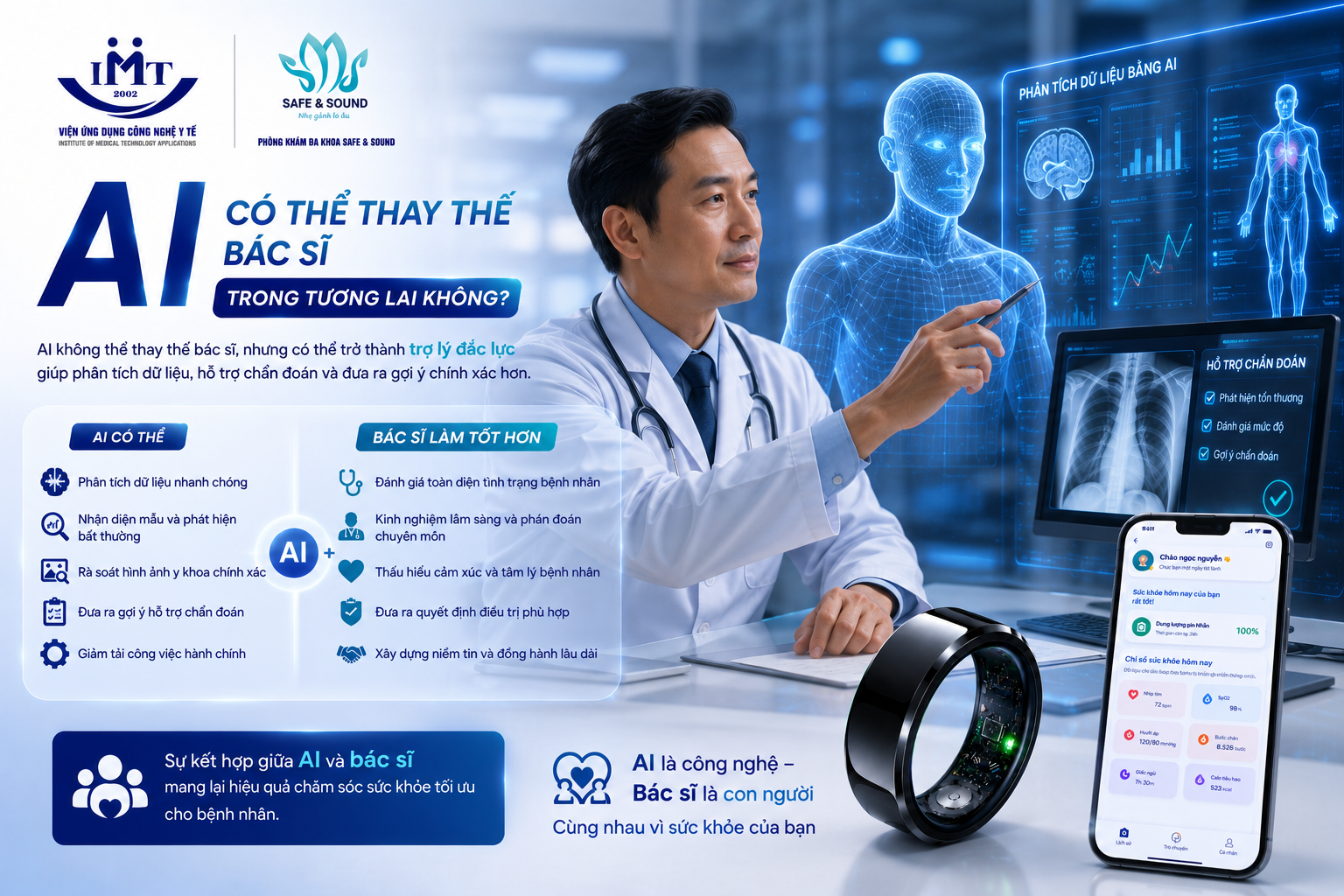
Although AI is becoming increasingly intelligent in analyzing data and recognizing patterns, medicine is not solely based on data. Treatment also involves clinical experience, psychological factors, personal circumstances, and many other elements that AI cannot yet fully replace.
The most suitable role for AI is to serve as a tool to assist doctors, helping to process data faster, reduce workload, and improve the efficiency of patient care.
AI in healthcare and personal health monitoring devices.
In recent years, AI has expanded beyond hospitals and is gradually entering daily life through personal health monitoring devices.
These devices can collect data such as the following:
- Heart rate.
- SpO2 level.
- Sleep quality.
- Level of physical activity.
- Signs of health changes over time.
When combined with AI, data is not only stored but also analyzed to help users better understand their own bodies.
This is also a trend pursued by many modern healthcare ecosystems, in which AI plays a central role in transforming data into useful information for proactive health monitoring.
>> See also: What is a Smart Ring? 7 Health Tracking Features Worth Considering
Conclude
AI in healthcare is gradually changing how people approach daily health monitoring and management. From assisting in diagnosis and early risk detection to health monitoring on smart wearable devices, artificial intelligence is making healthcare more proactive and personalized than ever before.
However, the greatest value of AI lies not in replacing humans but in its ability to support users and healthcare professionals in making better decisions based on real-world data. In the future, the combination of AI healthcare, health monitoring devices, and healthcare professionals is expected to create a more comprehensive, intelligent, and efficient healthcare model for everyone.
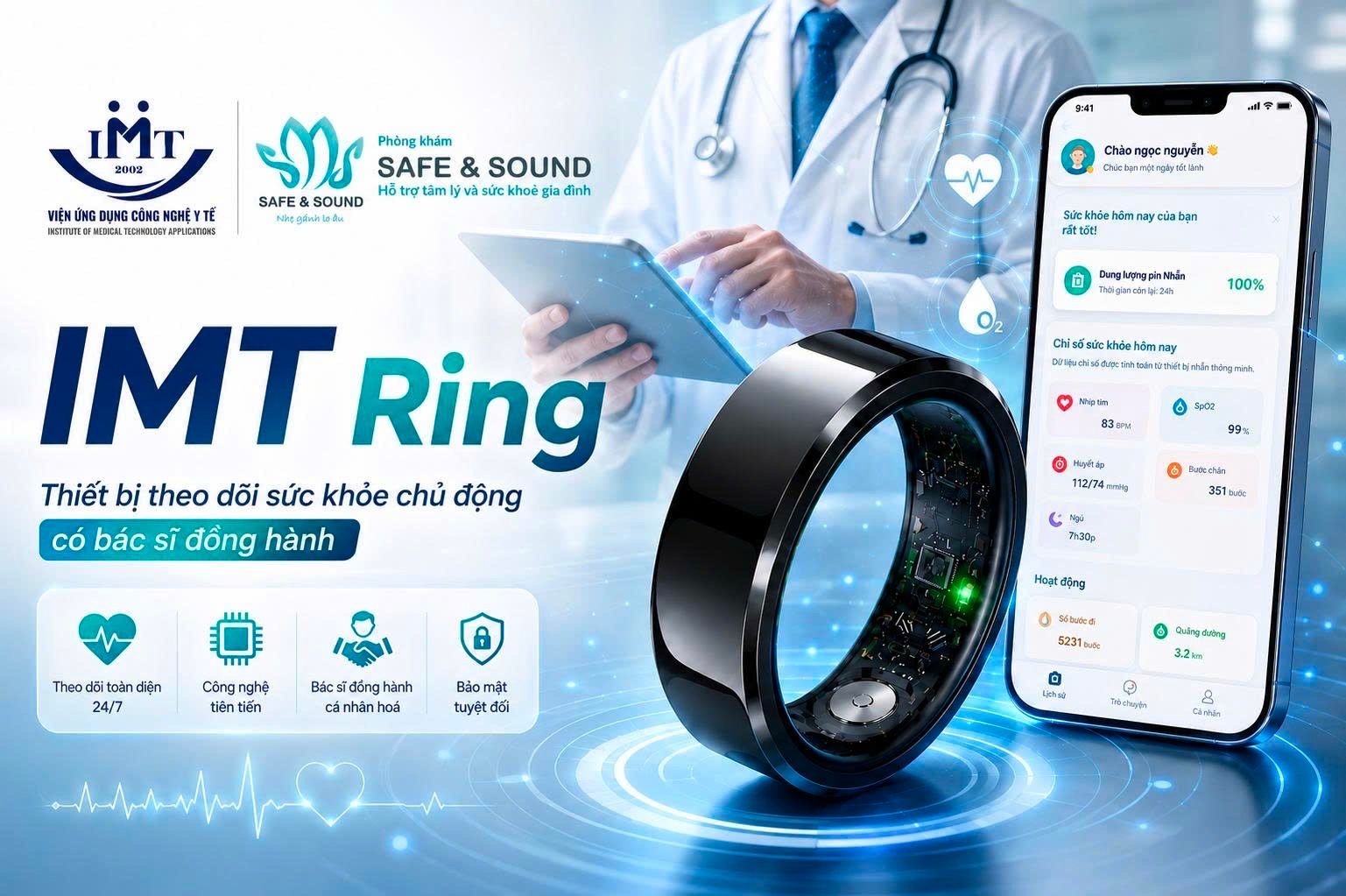 Developed with the vision of a "proactive health monitoring device with a doctor's support," the IMT Ring not only supports monitoring metrics such as heart rate, SpO2, blood pressure, and sleep, but also aims to build a comprehensive healthcare ecosystem. Through its integrated AI technology platform and expert connectivity, users can easily monitor, manage, and better understand their health status every day.
If you're looking for a solution that helps you proactively monitor your health in a simpler and more convenient way in modern life, the IMT Ring could be a worthwhile option to start your health care journey with even the smallest changes each day.
